

our services

How We Can Help
Not sure which service you need?
Start from your goal and we'll guide you to the right solution.


Services We Offer

High-precision scanning to capture the exact geometry of physical parts.
Best for: complex shapes, fast measurement, creating scan data.

Compare parts to CAD, check tolerances, and identify deviations.
Best for: quality checks, fitment issues, validation.

Convert scanned parts into accurate CAD models ready for manufacturing.
Best for: discontinued parts, broken components, reproduction.
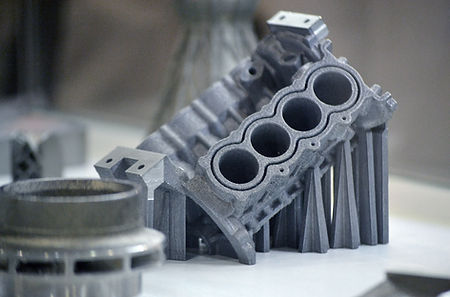
Rapid prototyping and functional prints to test fit and design.
Best for: prototypes, low-volume parts, quick iterations.

Create precise CAD models from scan data, drawings or concepts.
Best for: custom parts, modifications, new product ideas.

From prototype to production with suitable manufacturing options.
Best for: finished parts, small batches, production support.

Our Process
How our 3D scanning and reverse engineering service works.
1. Consultation
We discuss your project requirements, accuracy needs and intended application.
2. 3D Scanning
Your part is scanned using high-precision 3D scanning technology.
3. Data Processing
The scan data is cleaned and optimized to create accurate digital geometry.
4. CAD Modelling
Parametric CAD models are created for manufacturing or design use.
5. Delivery
Final files are delivered in industry-standard formats such as STEP, STL or PDF.

Deliverables
3D scan mesh models (STL / OBJ)
Parametric CAD models (STEP / IGES)
Editable CAD files for design and manufacturing
Engineering drawings (PDF / DWG)
Inspection and deviation reports

Frequently Asked Questions
Q1. How accurate is the 3D scanning process?
Our scanning workflow provides engineering-grade accuracy suitable for design, reverse engineering and manufacturing applications. The achievable accuracy depends on the size and geometry of the part.
Q2. What steps are involved in recreating an existing part?
Recreating a part usually involves the following steps:
Consultation → 3D Scanning → Data Processing → CAD Modelling → File Delivery
First, the part is scanned to capture its geometry. The scan data is then processed and converted into a precise CAD model that can be used for manufacturing, analysis or redesign.
Q3. What information should I provide for a 3D printing project?
If you would like a part to be 3D printed but do not have a 3D file, the following information is helpful:
-
The physical part (if available)
-
Photos of the part from multiple angles
-
Basic dimensions or measurements
-
The intended use of the part
Based on this information, we can create the CAD model and prepare it for 3D printing.
Q4. Can you reverse engineer damaged or incomplete parts?
Yes. Reverse engineering is commonly used to recreate discontinued or damaged components, allowing them to be reproduced or redesigned for manufacturing.
Q5. How long does the process take?
Typical turnaround ranges from a few days to several weeks, depending on the complexity of the part and the level of modelling required.
Q6. What industries do you work with?
Our services are commonly used in automotive, manufacturing, product design, restoration, and prototyping projects.